That’s all folks from the Blog…Until Patreon!
I hope you have enjoyed reading some of my insights on this blog as much as I've enjoyed posting.
Big changes are coming to Lindsay Tempest Art later in 2026. I'll be launching Patreon with three membership levels. Within these tiers, you will be able to choose what service you would prefer. And across all tiers, there will be a newsletter that includes posts similar to this blog, focusing on education and information.
When Patreon launches, Eventbrite will no longer be in use to deliver my workshops. There will be a direct link from this website. You can follow to decide what package you would prefer. And I promise there'll be some fantastic stuff, including tangible prints, discounts, webinars, PDFs and exclusive content.
So for now, keep following me on social media. Thank you for supporting my work!
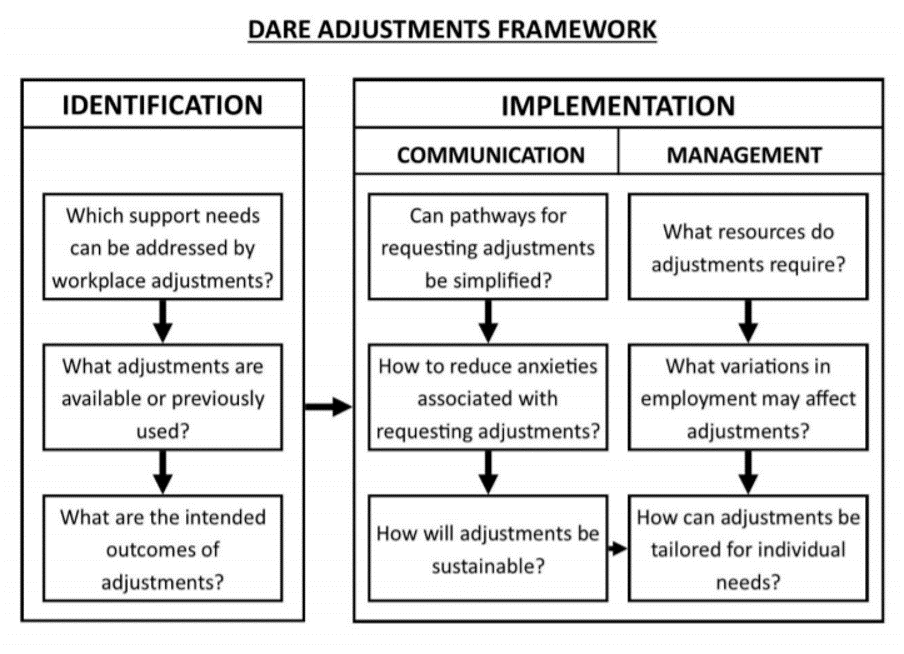
Neurodiversity and Reasonable Adjustments
I was diagnosed with autism and ADHD 5 years ago. Since then, I have not once asked for reasonable adjustments. I also don’t intend for this to continue.
Being a woman and an artist isn’t the best combination for getting paid fairly. If you add into the mix the complication - as it would be viewed by many organisations - of reasonable adjustments, you could be forgiven for thinking you could lose work.
The media deliberately stokes this fire, claiming, in particular, that neurodivergent people get preferential treatment, which clearly disadvantages other non disabled people.
As a person who also suffers from chronic conditions (I need a hip replacement and suffer from chronic migraines), I hardly ever mention this either, yet ironically, it’s often in the case that I am supporting people with other chronic conditions and disabilities.
On the flip side of this, if you don't tell an employer or contractor how they are supposed to support you, how are they supposed to know? How could the situation improve unless we raise awareness and take that chance?
I absolutely love my work, but I pay a heavy price for doing it. After teaching, I’m often exhausted for the rest of the day, if not the day after. But if I don't speak up, I'm doing a disservice to myself and my fellow disabled artists. Sometimes you don't get the result you want, and I know that from fighting for my daughter's provision. But if you don't raise the issue in the first place, you definitely won't get the support.
Image; NDSA.UK
Drawing on Location
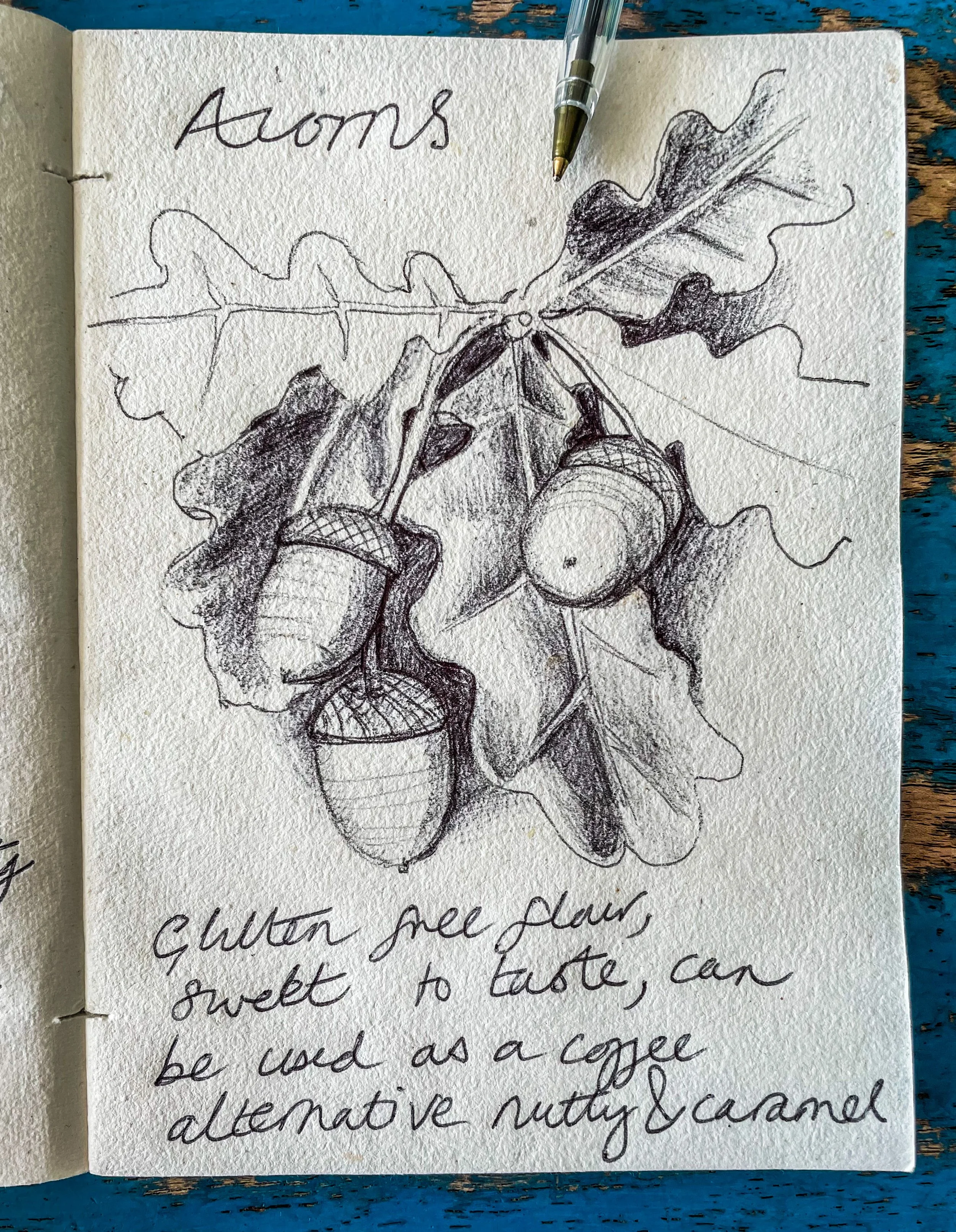
Drawing on location and the potential benefits
The freedom to explore without the filter of time. A pen or pencil can move over paper almost in a ‘blind’ state of drawing, interpreting what the eye sees. If you are alone, it is far easier.
In nature, we can take our time without worrying about judgment. We can really look at what is before us and practice mindfulness in its truest form.
To draw people from life, strangers, take guts, although sitting in a café window makes it slightly easier by a step of removal and protection.
These practices improve our observational techniques and skills immeasurably, as well as our confidence. It is the act of allowing ourselves to do this without judgment that matters.
Can you enjoy the process rather than judging whether your drawings qualify to be kept? Can you embrace the experience over this judgment? Can you develop a practice where your enjoyment overrides all other elements?
Could you at least try? You might surprise yourself.
Fair Pay for Artists
Fair Pay for Artists
Fair Play = Fair Pay
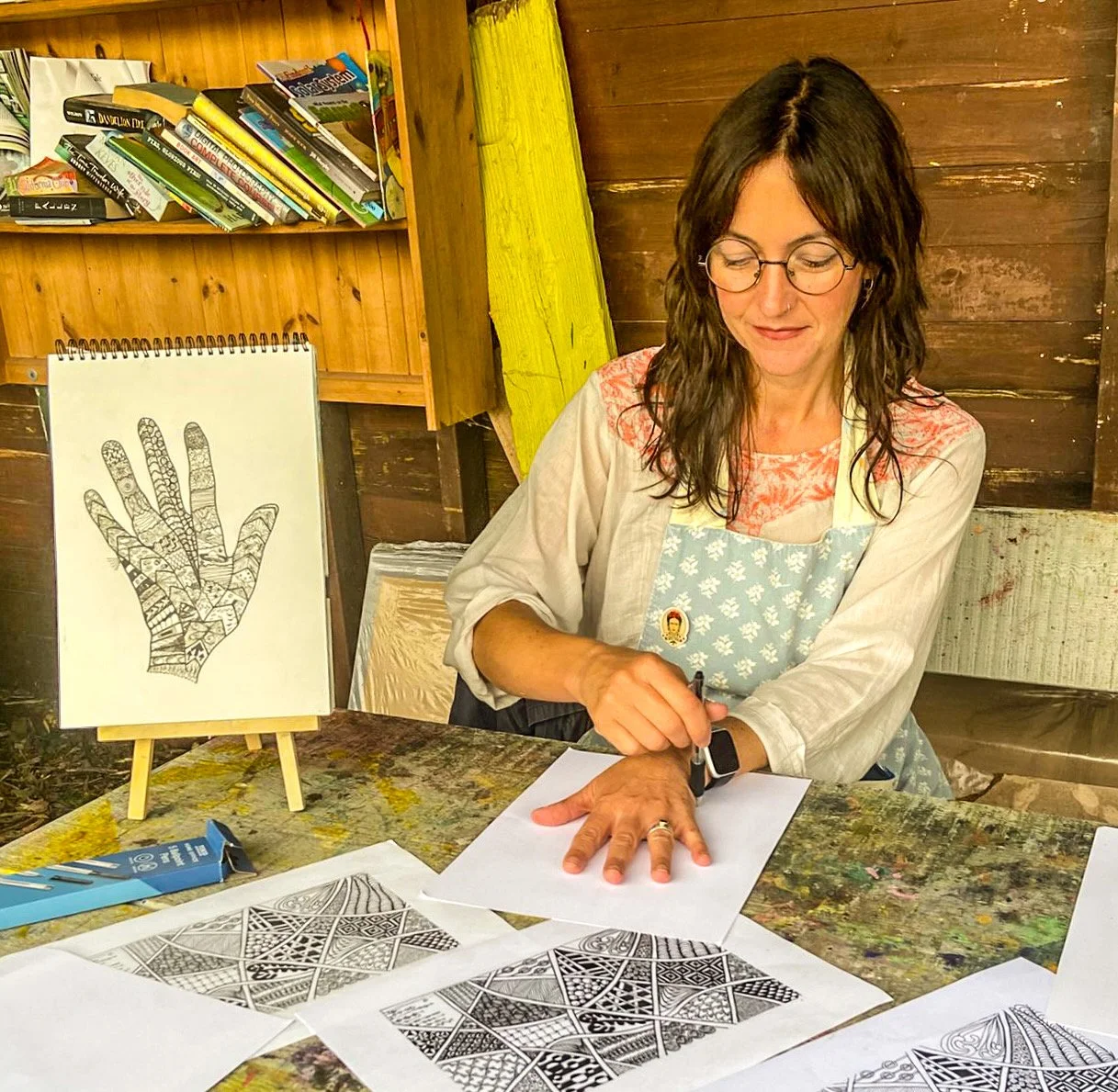
This blog post follows directly from the last in terms of subject; experience and education of an artist and art tutor, and what to set as a reasonable financial exchange for your product. I posted about this on social media recently, and it had a huge response.
Pay…Where do you start as an artist? Or as a facilitator wishing to contract an artist.
A good place to start is Artists' Union England.
The adage for hundreds of years has been that, as a creative person and especially if you were a woman, you shouldn't expect to get paid properly. Your value is not only taken for granted but also actively disrespected. Asking to be paid for the experience, talent, and education you have invested in is not bad.
If either party is stuck, use the Artist Union England guide to do the negotiating for you.
Staying small as an artist not only betrays the artist but also fellow artists. What is shocking about this is that personally, I've had other females expect me to work for maybe £20 an hour (this has happened several times over the last six months). My own familial examples reinforced this devaluation, too. I'm not stating I think this is deliberate, but that doesn't make it acceptable. In the last 10 years, I worked as an art technician three days a week and barely earned £6k a year in an environment where male managers were on 6 figure salaries. I physically and mentally injured myself doing that job, feeling that I should be grateful for the opportunity. Essentially, both attracting and accepting crumbs and borderline abuse. This is not who I am anymore.
For a lot of neurodivergent people, fighting for rights and justice is not only excruciatingly difficult but also a pivotal part of who we are. Unfortunately, the downside is often being shamed or feeling shame and second guessing ourselves.
Me, Teaching
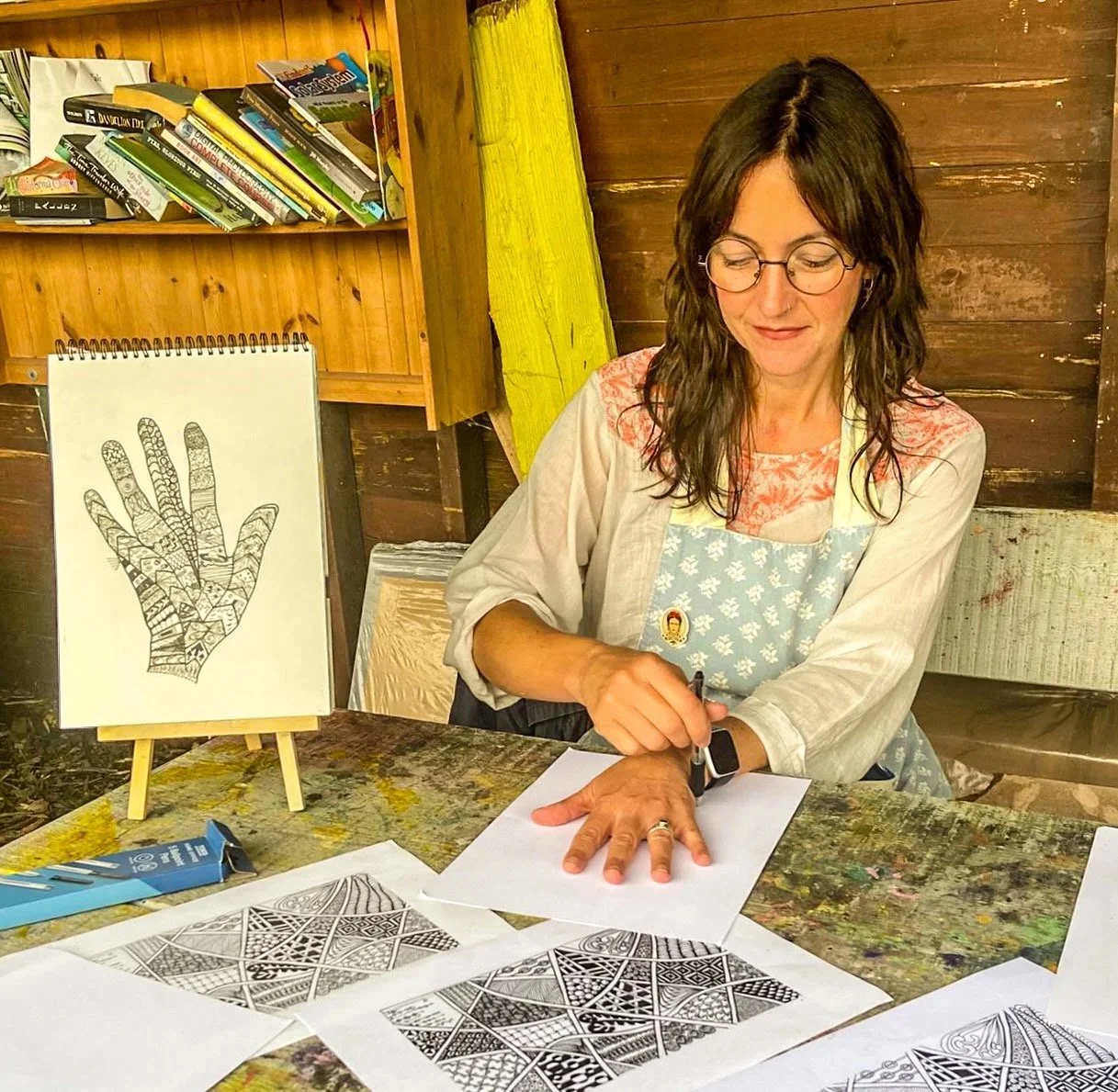
What makes our expertise in today’s world less valuable than that of any other specialist? The conditioning of the patriarchy. Why should I, as someone with 30 plus years of teaching experience across all age groups, educated to MA level (with an average debt of £45k), and a lifetime of experience making and selling art, settle for less than what is fair? Dont forget things like insurance and DBS checks too. The only way we can change this is by refusing to accept less.
NB As stated on social media, the current settings I freelance work for do support fair pay.
Teacher, Tutor, Educator, Facilitator…
What’s in a name?
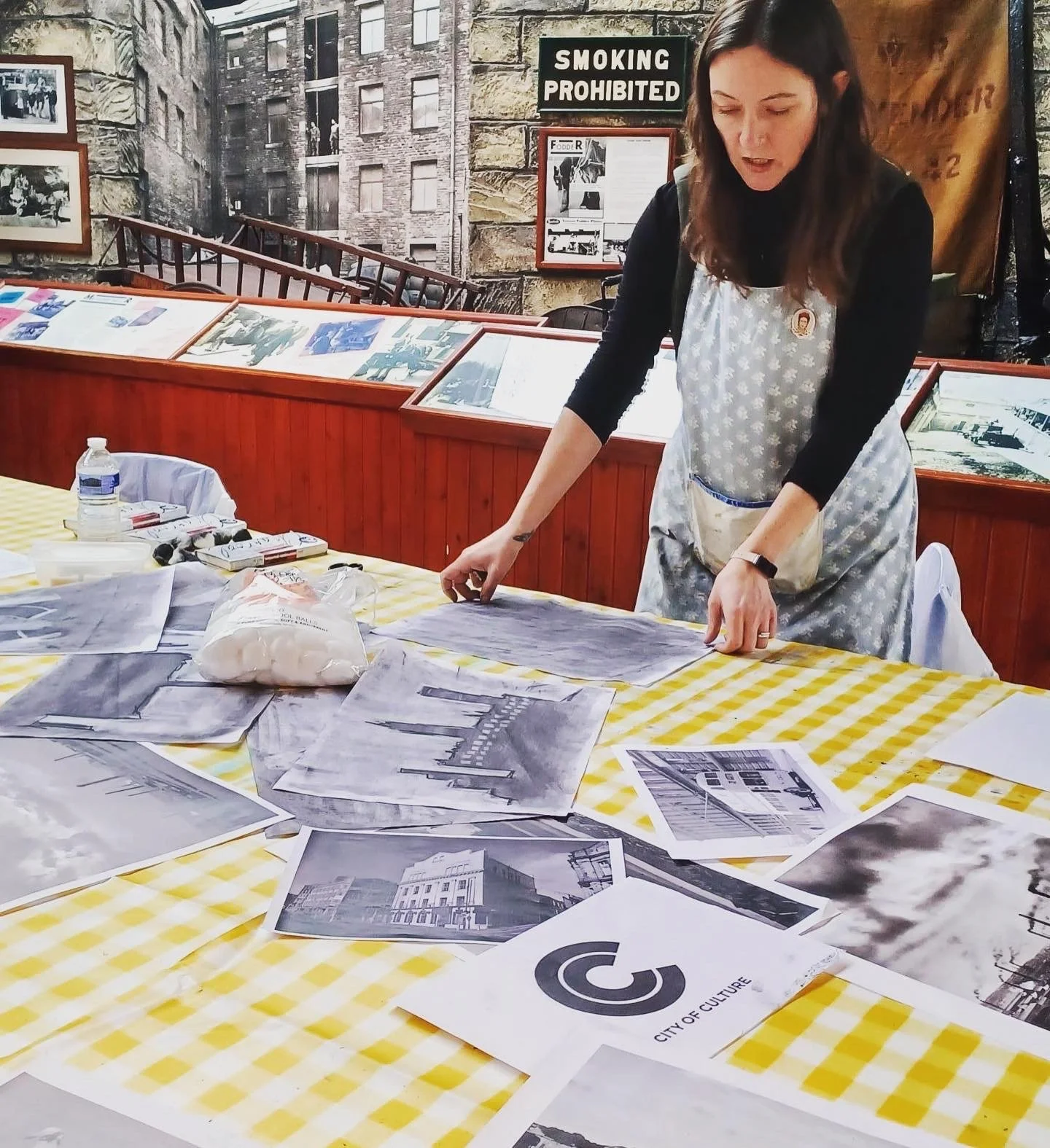
How do we know how to label ourselves in a saturated world of classes, groups, workshops, and sessions? I’ve pondered this a fair bit, and for me, it’s credentials and experience that make the difference.
Hobbyists have their place, given their experience and skill.
Then there’s a person who’s educated to a higher level (say 6 or 7) in their field. This is experience, knowledge, and a tried and tested individual you can trust to provide answers and direction.
And then some individuals have a combination of education and lived experience. They live their specialism with regular practice and dedication.
There are many people with unique journeys who must decide how to introduce themselves to their audience.
I label myself a tutor because my teaching specialism is higher education. I also fundamentally don’t like the word teacher. It has a lot of negative connotations for me, both personally and professionally. But also an artist because that’s what I am. I think it’s difficult to get this right because people interpret these titles individually anyway. But I think choosing it, and it representing you authentically and in the closest way possible, is what matters. That way, your audience can make a decision about what you offer…
Exhibitions - Location, Location, Location
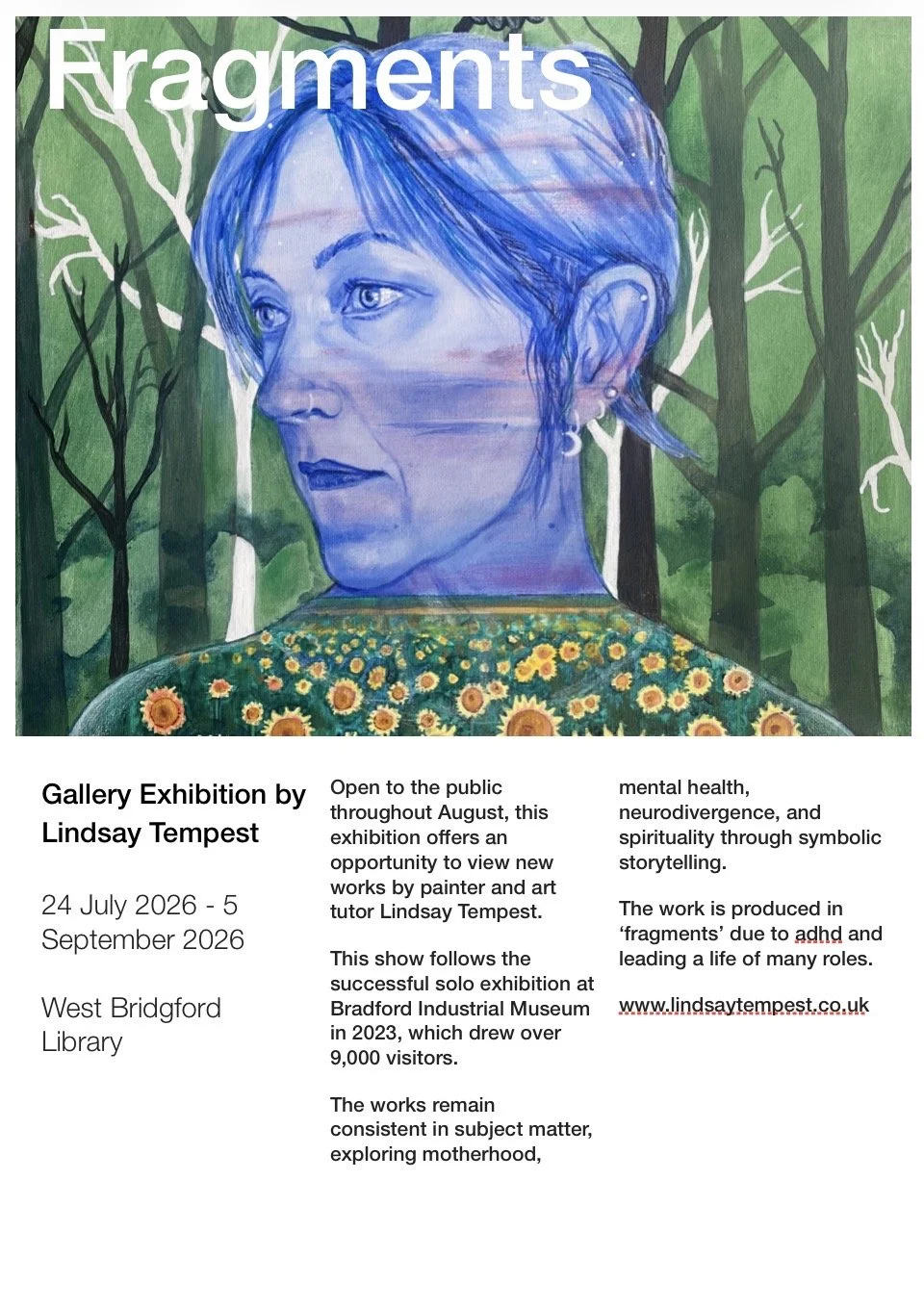
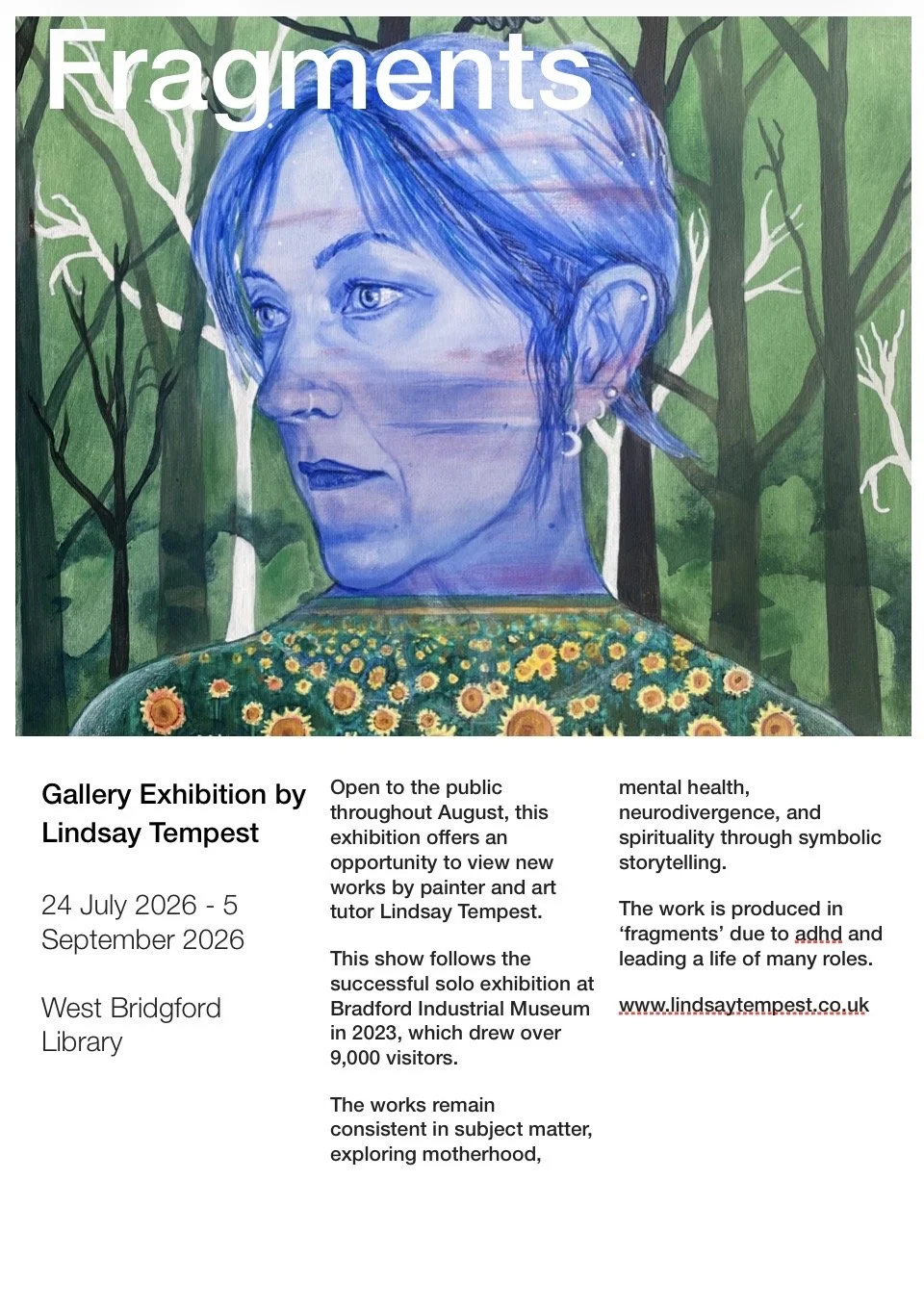
With an exhibition just around the corner, the deadline is increasingly prominent in my day-to-day life.
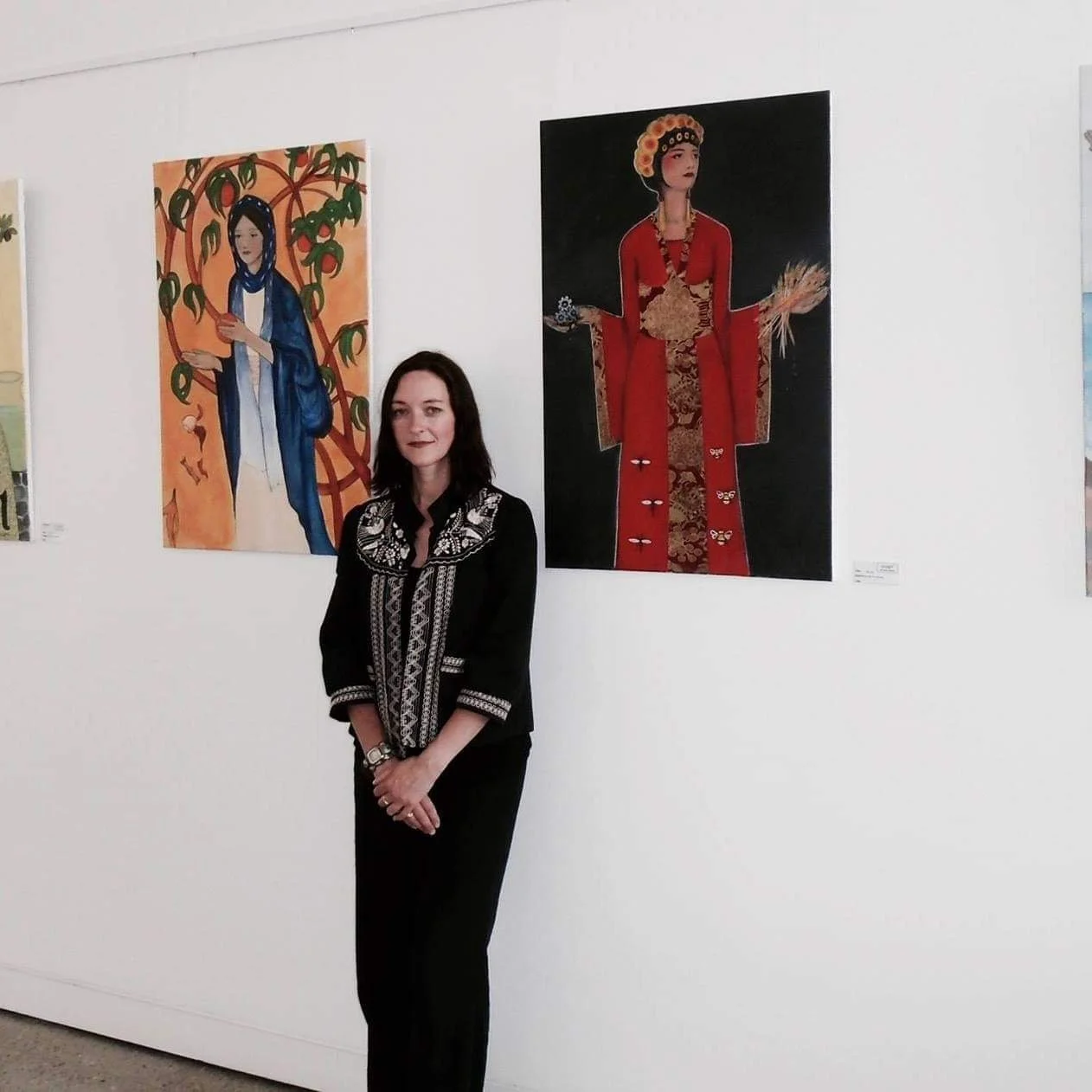
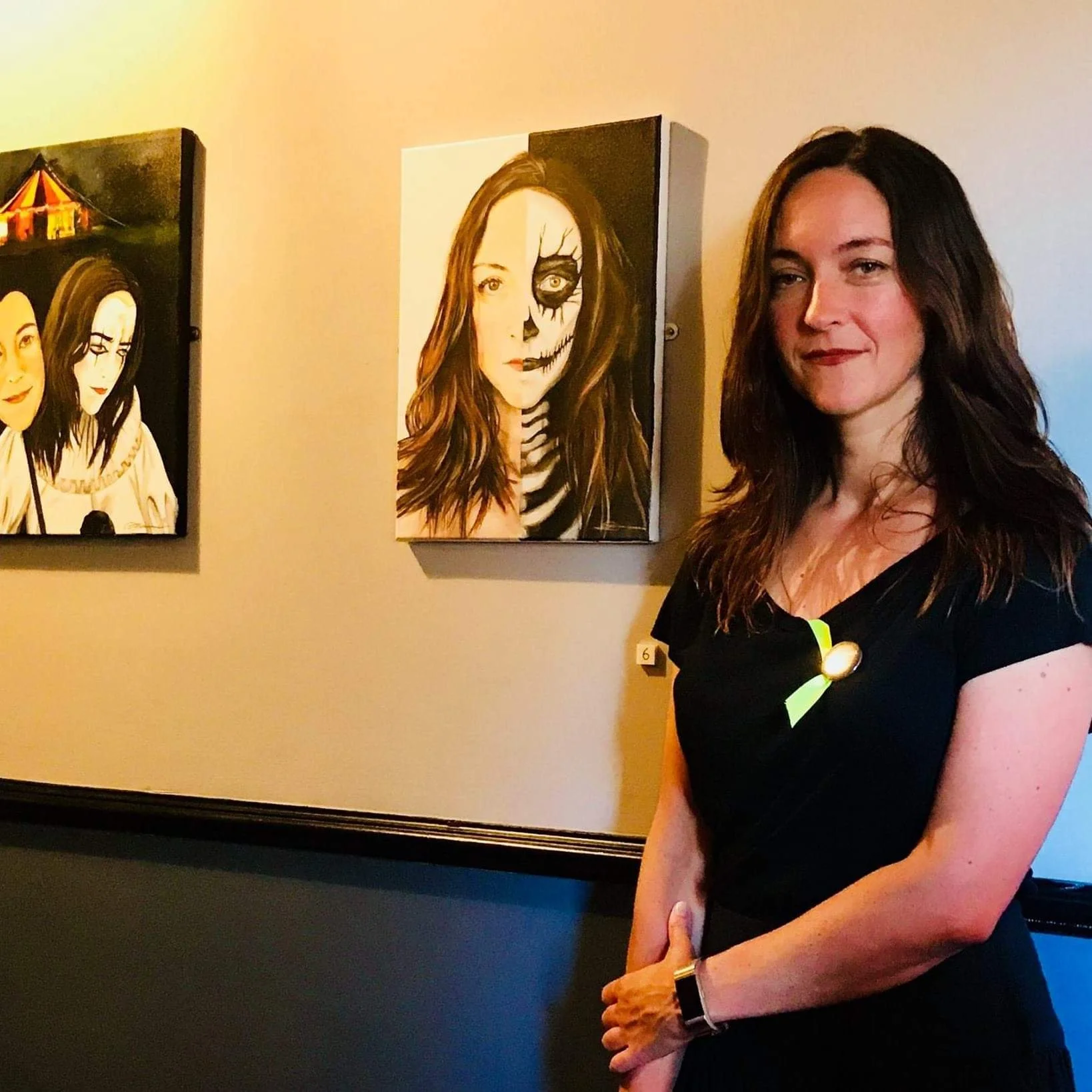
I've had several exhibitions over the years. Some inevitably have been more successful than others. But success is a subjective thing. Is it about selling work? Or looking to network with other creatives? Or could it be the hope of attracting people to some workshops? Or bolster a professional profile?
I have found the location of each exhibition paramount in all of these cases. Inevitably, when I have exhibited in more affluent areas, sales of physical paintings have increased.
I have a secondary line of products: my journals. I will write more about those in a different post. But, as Im not really a committed illustrator, rather a fine artist, I don't sell other items, such as T-shirts or mugs. But I do sell prints.
When I exhibited at Bradford Industrial Museum in 2023, there was a visit figure of nearly 9000. I didn't sell a single piece of work at that exhibition, but I did sell some journals—at a more reasonable price point.
And what about marketing exhibitions? Does one know if the local press really works? Or word of mouth? Obviously, these forms of marketing are never going to hurt, but the more prestigious the gallery, the more justifiable the fee to advertise in high-end areas. It’s a roll of the dice.
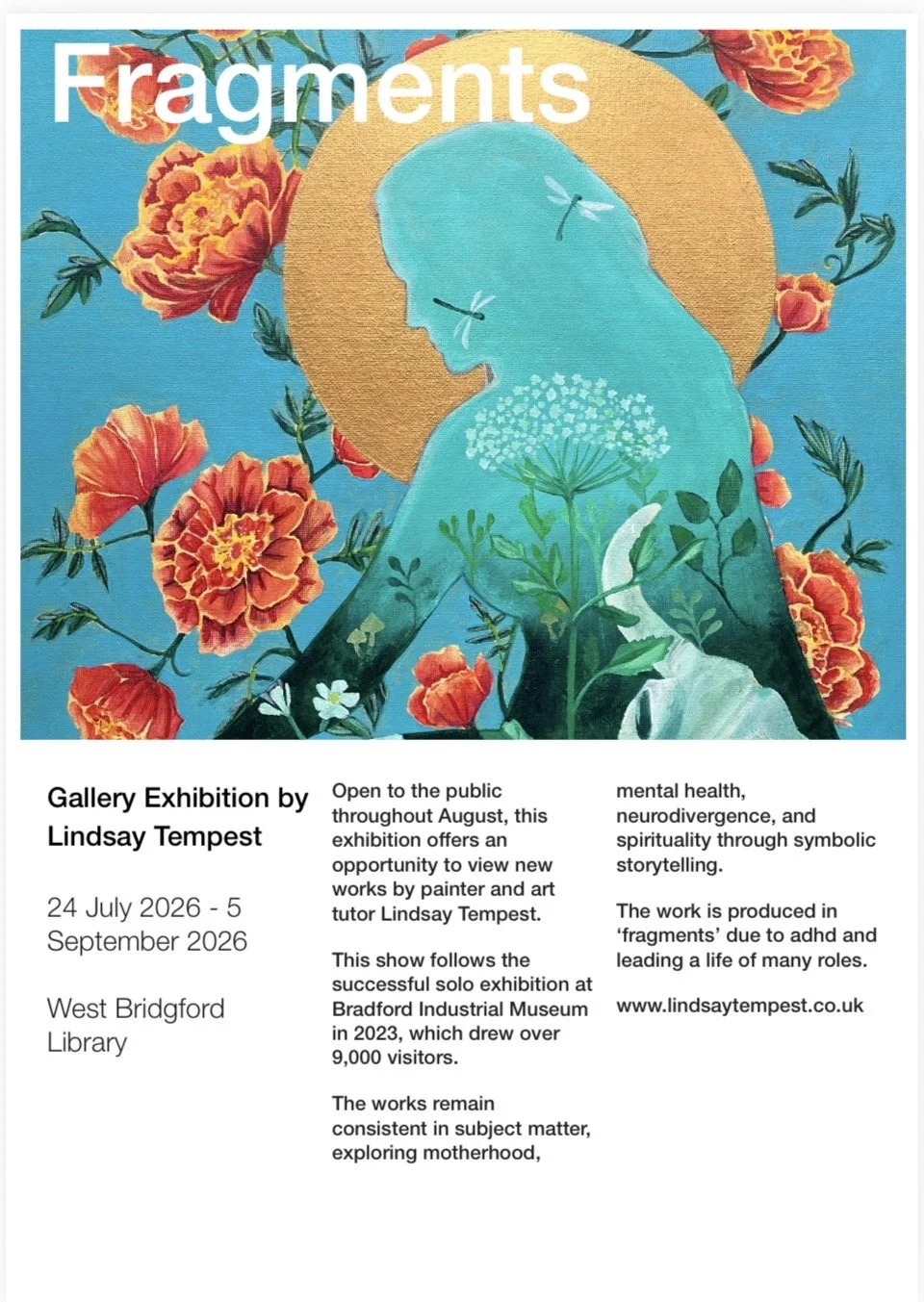
The next exhibition I will hold is in West Bridgford, Nottingham. Although it is in a library, I am paying a substantial fee to exhibit here over the summer. City exhibitions of any notable size are highly sought after. And I'm delighted to say that my exhibition is running over the premium time of the summer holidays. This suburb is affluent and happening, it’s always busy, being a stone’s throw from the Trent, Trent Bridge and the City itself. There are boutique shops and cosmopolitan cafés, and having a Marks & Spencer's is definitely a sign of the area's general class.
Bradford Industrial Museum 2023
This new exhibition has taken 18 months to bring into being. And I'm so glad that, despite my commitments, I've managed to produce work I'm extremely happy with over the last couple of months.
As humble as it sounds, my main objective is to facilitate a connection with my art. Over recent times, I have poured into each piece the conflict of human emotions that have been the backdrop to my own life. Despite some of the subject matter being difficult, I am dedicated to creating beautiful work; many a self-portrait symbolising the pain of parenthood when a daughter’s needs aren’t met or taken seriously, being neurodivergent, and all that brings, the beauty and staple of nature, dealing with health issues, relationships and so on.
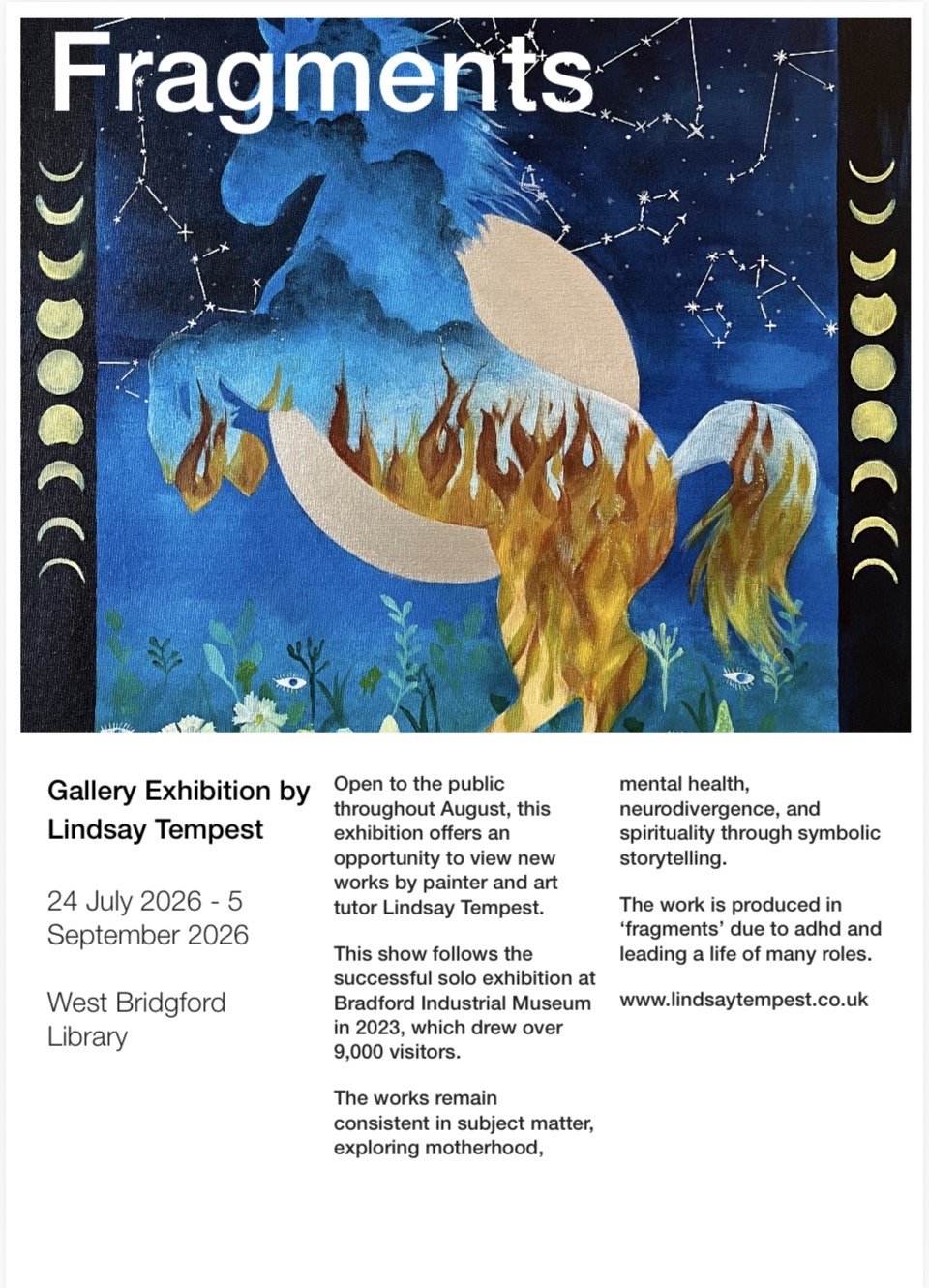
Recently, I've been inspired by folklore and myth. If I feel an affinity with a historical or mythical figure who represents something I feel is just as relevant today, then they will be my muse. Subjects such as the fire horse have been so apt for 2026 so far. I’ve also painted Psyche and Guan Yin, and presently I’m working on the last piece before the exhibition starts - I won’t mention what it is yet. Beauty and meaning that stirs the soul in an AI age. Inspiration, examples of courage, beauty, and overcoming.
And of course, if I sell some works, I will also be very happy!
Beds BC 2016
Bedford Panacea 2020
Artist attracting Artists, not Clients
Over the past 30 years, as a professional artist, the overwhelming majority of my followers have been other artists….why?
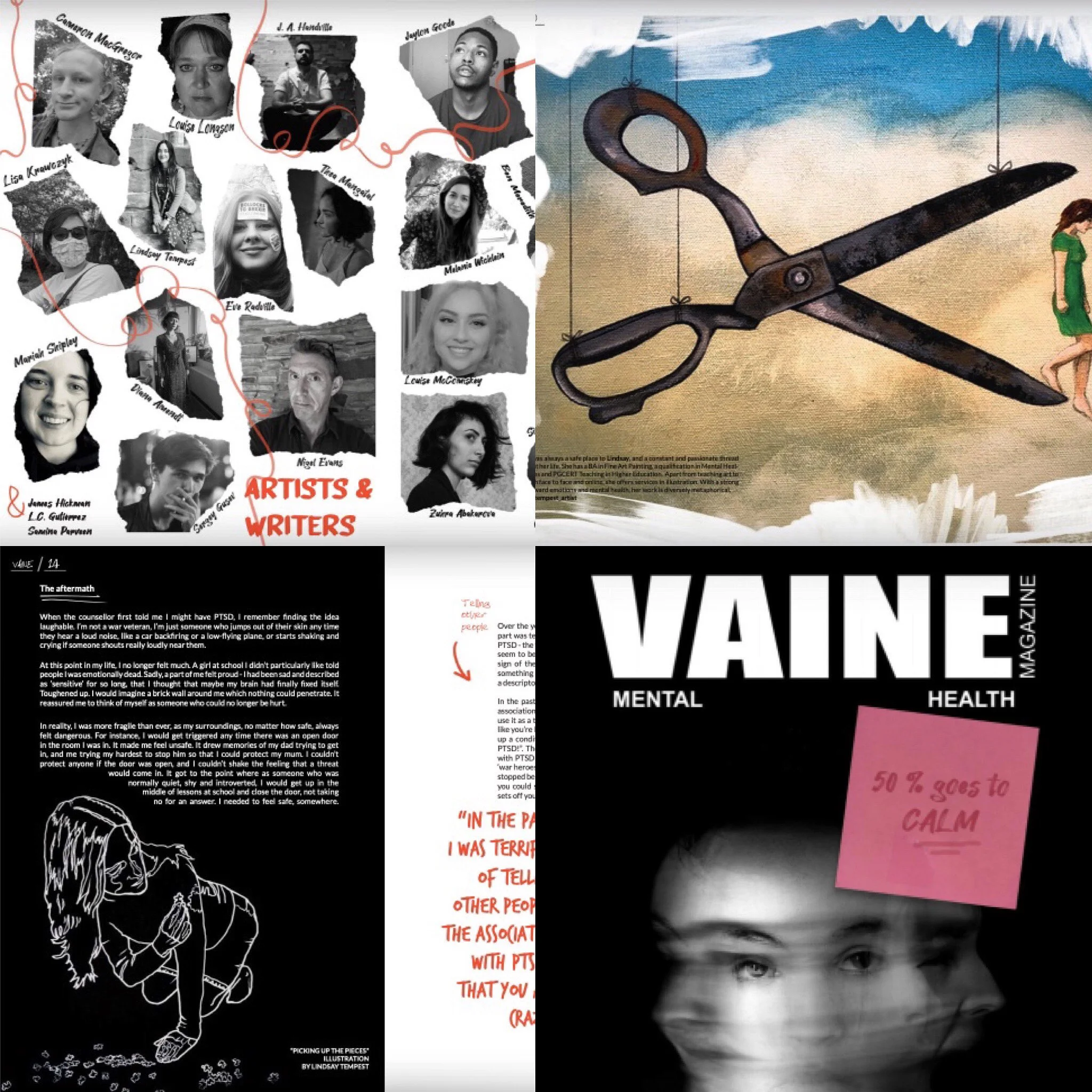
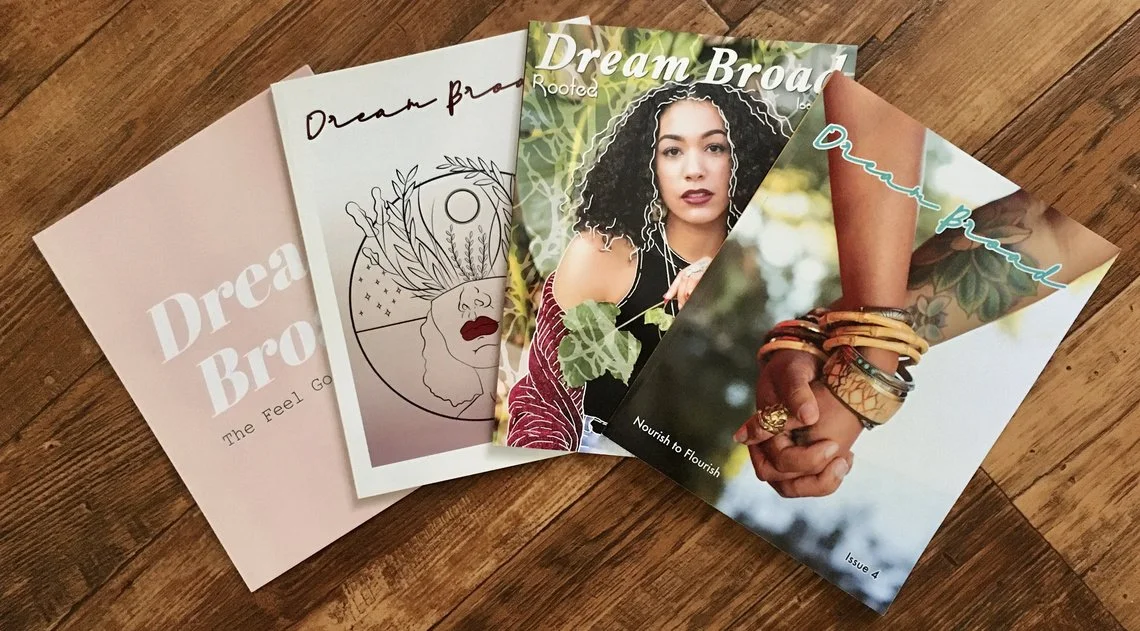
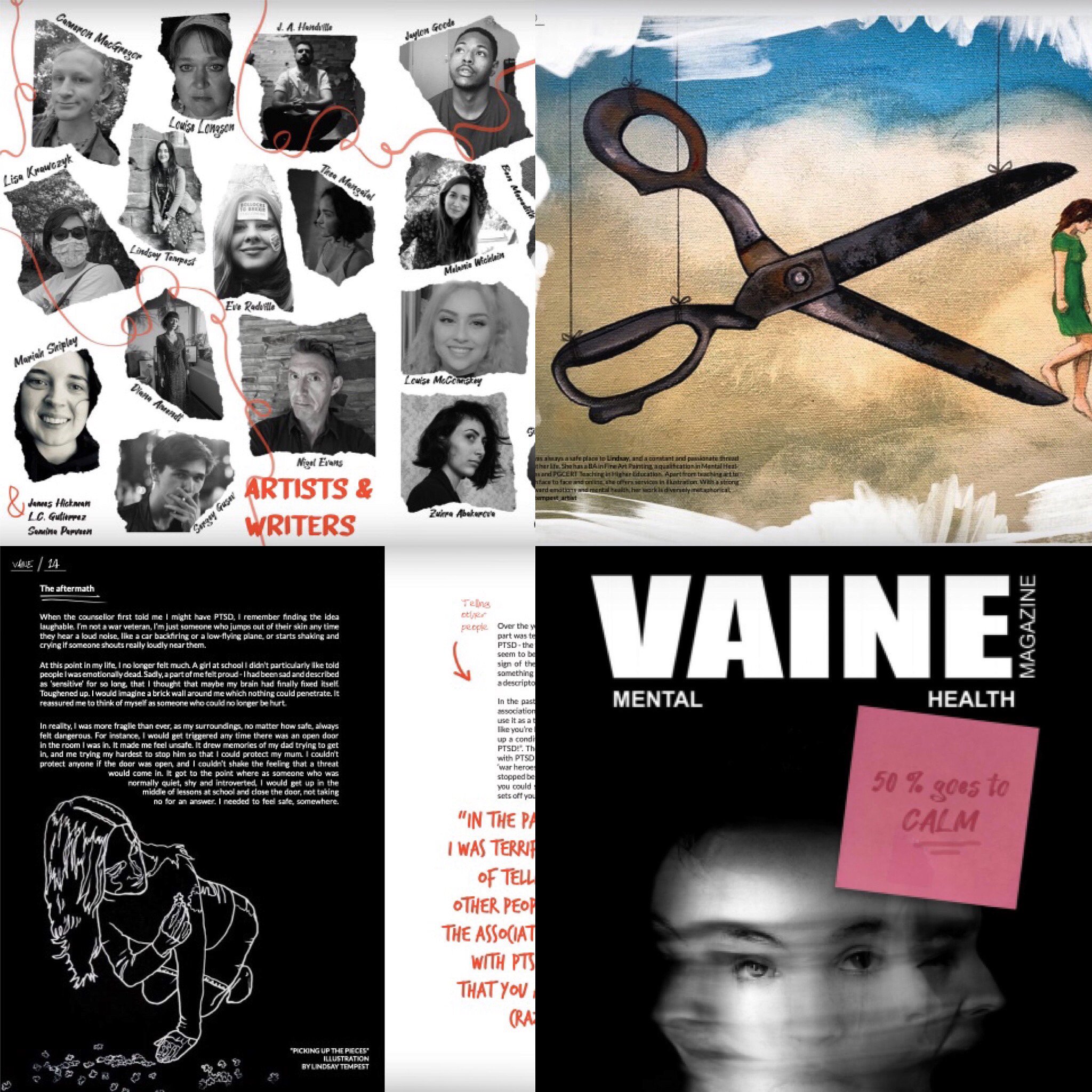
Over the years, the magazines that I have illustrated for include;
Vaine magazine
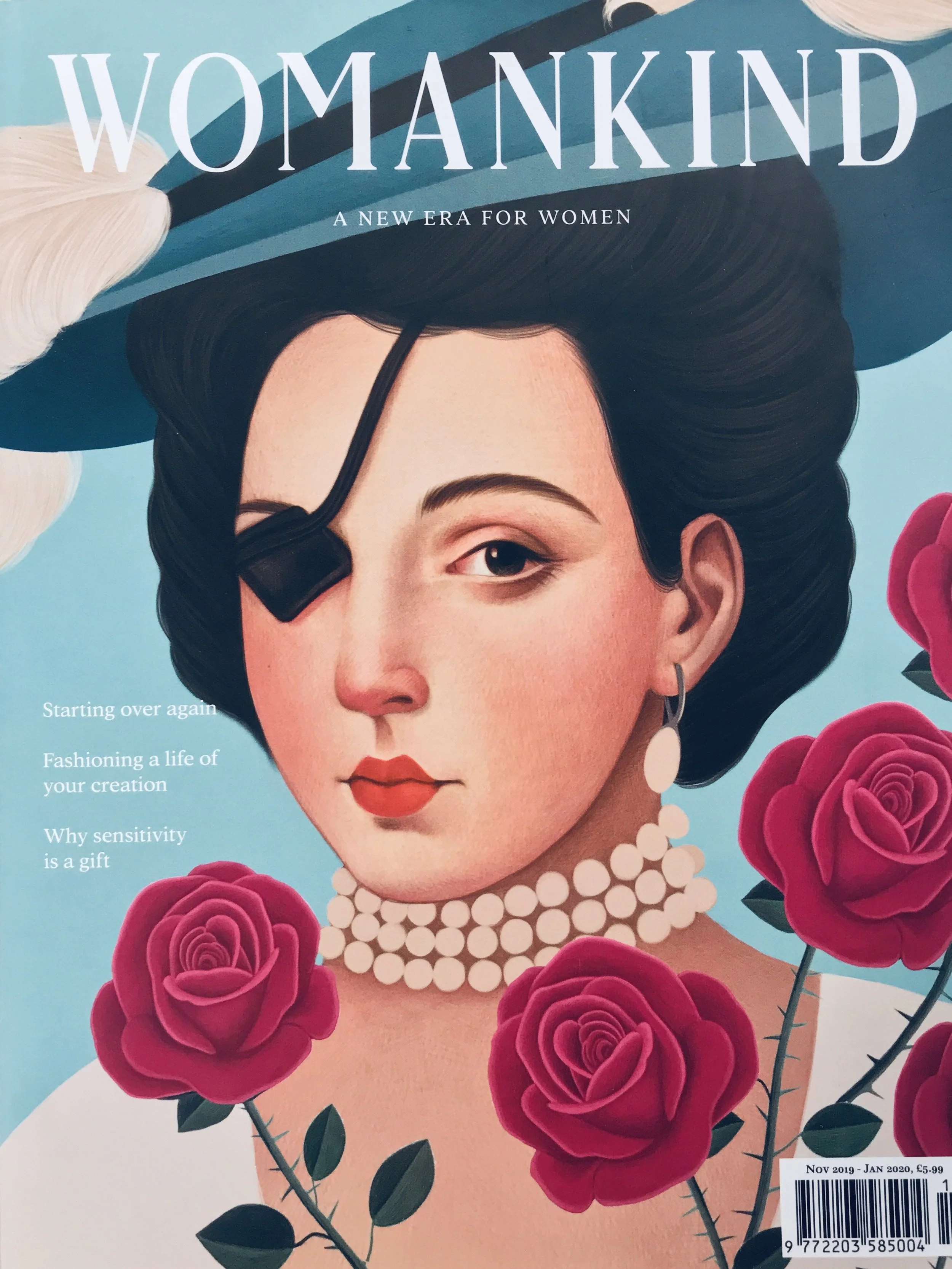
Womankind magazine
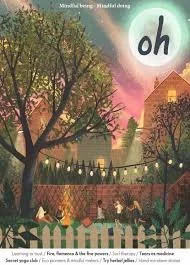
Oh magazine
Dreambroad magazine
Women’s magazines... I've also been involved in tens of projects, including disability calendars, newsletters and pamphlets for new mothers and mental health campaigns. And yet, despite this, so few of these commercial opportunities have converted into paying clients for either workshops or buying my work.
I'm changing my positioning as an artist, currently in terms of what I'm attracting from the universe. Recently, I made a social media post about artist pay and my journey to asking for what I should be paid, given my qualifications and experience. It was the most successful post of recent times.
My position change is recent. You have to come to things in your own time, and I realise that my confidence in my craft may have been lacking. Inevitably, not asking for payment for full value means you're most certainly not going to get it.
So, instead of posting for appreciation from my peers, a fundamental step change in how I post for potential clients is required.
Because my work deals mostly with my experiences, these being;
Motherhood
Menopause
Being Neurodivergent
A deep appreciation of the natural world
A growing desire to connect with folklore, magic and historical figures who stir a fundamental connection to the mystery of the earth, the elements and humanity. A direct antidote to an AI generation.
Colour and emotion
Naturally, my clientele will therefore be women with an affinity for the above subjects. Positioning is important; intention is important.
So I guess this post is a prayer to reach those women who want symbols of mystery, vibrancy, and the feminine to adorn their walls. For the women who feel like they've been left behind, never prioritising their needs, but who could maybe manage a couple of hours a month to create art guided by me, which has proven benefits for their mental and physical health.
I am here waiting for you.
Selling Art - but where do you start?
So, I don't have an answer to this, or rather, I'm still figuring it out. Things I do know;
Saatchi Positives: I do know it's the most-visited website for buying art in the West, along with Artsy. Today, I've been on this website for about seven years and have only sold prints. Negatives: Ethically, I'm not really aligned with this organisation for personal reasons. Also, the fees are really high.
My Website Positives: You can pay me directly, whether you order prints or ask about buying art. No fees, just my commission. Negatives: I only post in the UK.
Currently, I advertise and use Facebook, Instagram, Pinterest, and LinkedIn, but this doesn't really count for selling art rather workshops.
Exhibition Positives: people see the work in the flesh and know what they're getting. This is by far the best way to build a relationship with clients. Negative would be the gallery or exhibition space's fees. I am, however, looking into Open Studios next year, which I do feel really excited about. If you're in the UK and have ever watched Make it to Market, you'll know it's one of the things that comes up over and over again to raise people’s profiles and sales.
I still have a lot to do with my marketing, but my personal life has not been conducive to focusing solely on my art. I plan to expand my reach by joining Patreon at the end of the year and building an email list. Watch this space.
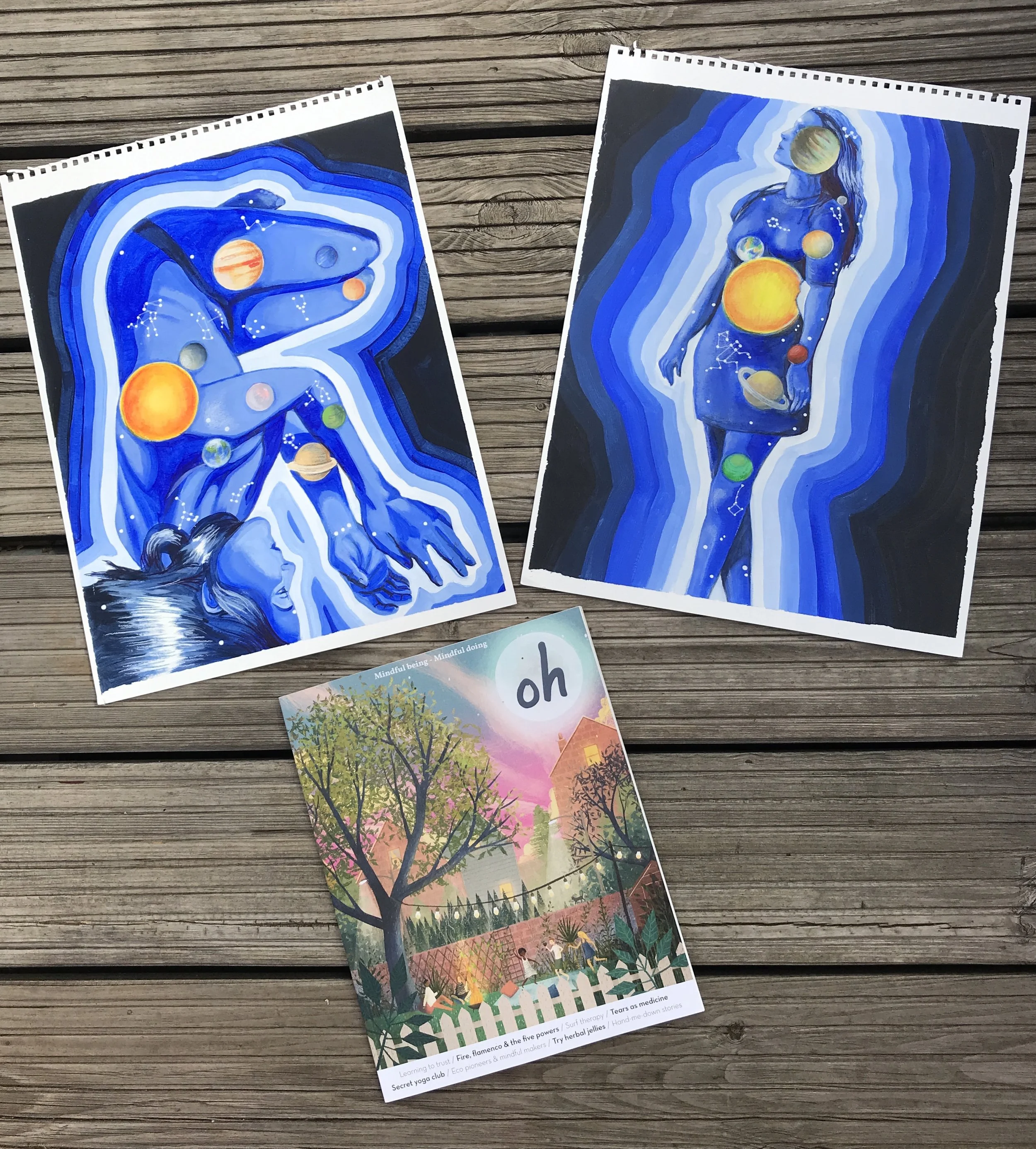
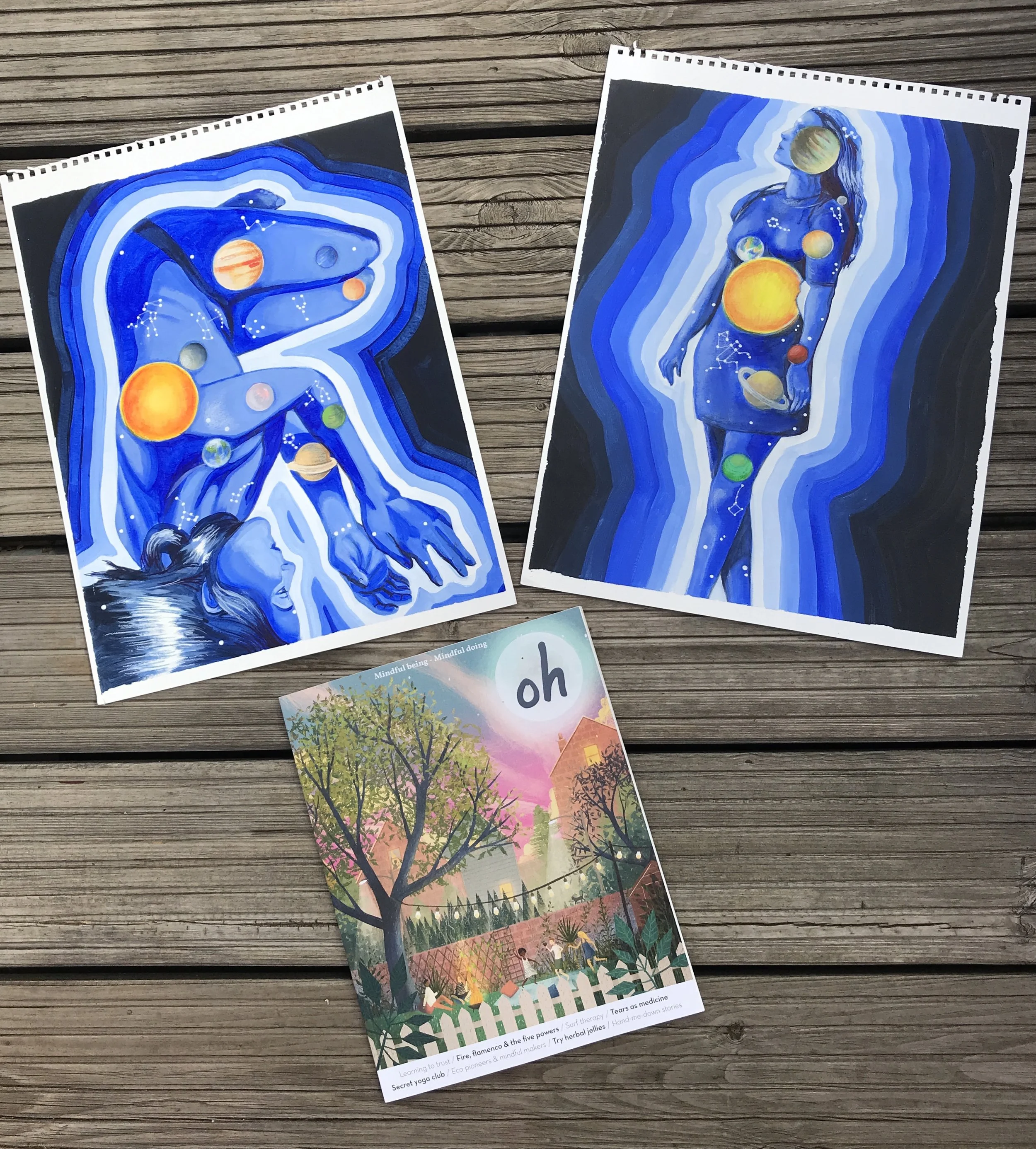
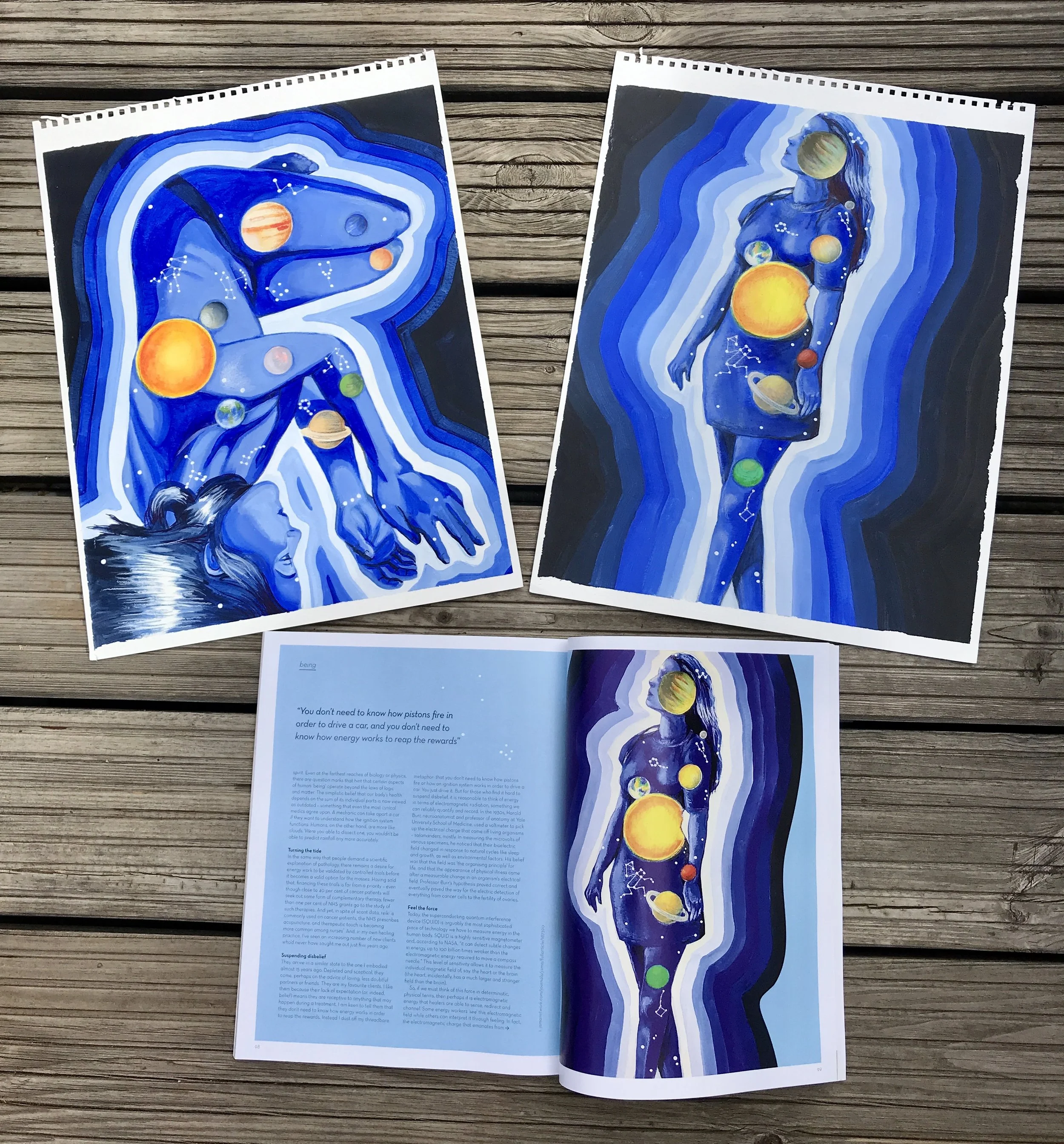
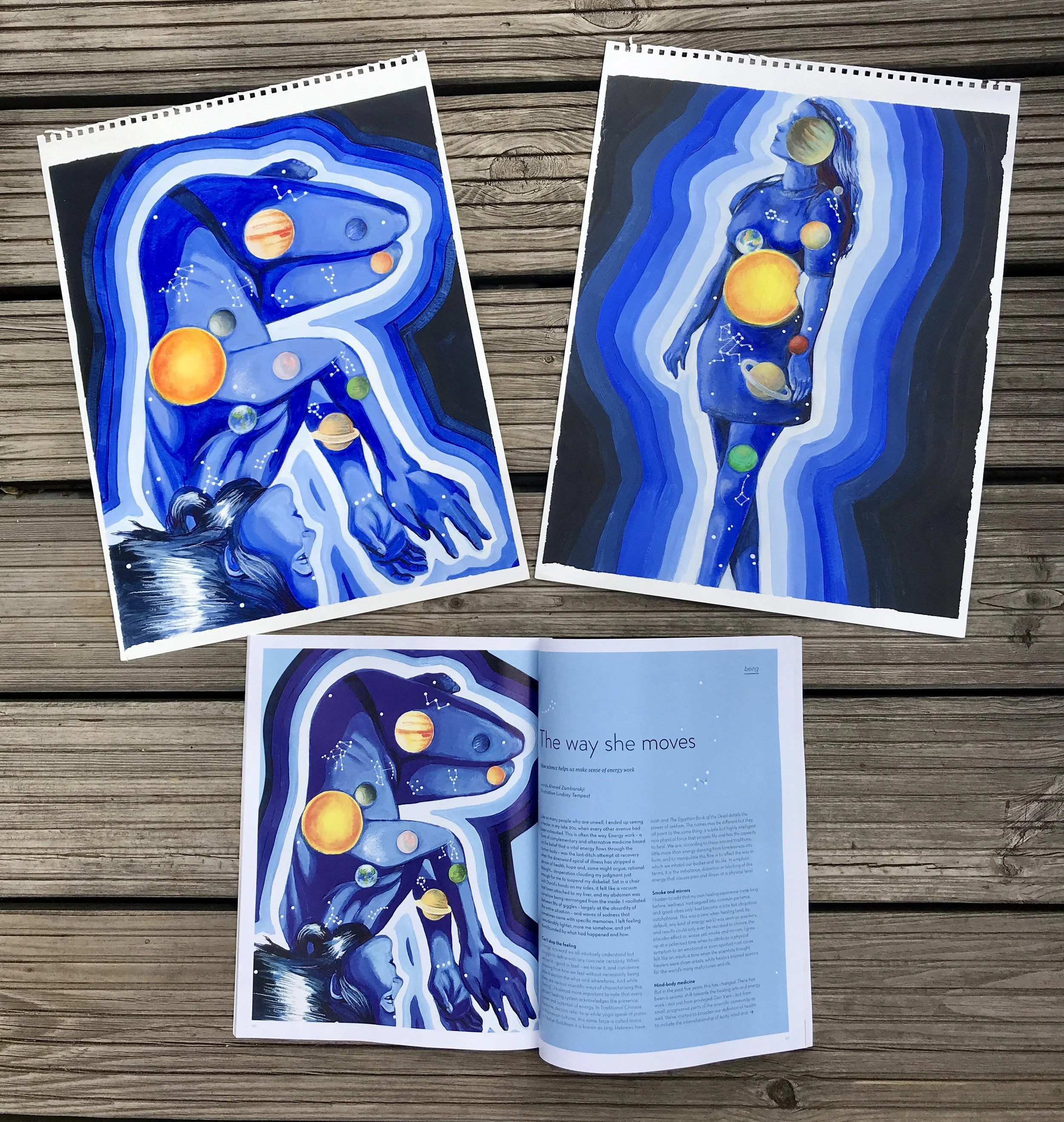
‘Oh’ Magazine Issue 55 - Illustrations for ‘The Way She Moves’ and the way it didnt move me…
So, having reached the top five in the Womankind Illustration Award in 2019, I pursued several publications that I knew accepted submissions from inexperienced illustrators. ‘Oh’ magazine got back to me and accepted me as an illustrator for an article on energy work. This was brought about by their positive response to my work, ‘Inner Space’.
Sadly, I didn't find the experience great because I don't thrive on vague communication. Their expectations were too high, given that I'm a traditional artist; I work in acrylics, coloured pencils, and so on. This is something to bear in mind if you are interested in illustration. I do not work digitally. Also, the pay was poultry but I understand a foot in the door can be really valuable in this industry.
I'm not going to label this a completely negative experience. Within all experiences, there's something to be learned. And it really just proved that I am an artist, not cut out to be a commercial illustrator. Illustrating my own briefs is more fun for me anyway. And seeing your work in a national magazne is always going to be enjoyable!
WOMANKIND INTERNATIONAL ISSUE 22 - To Illustrate or not to illustrate?
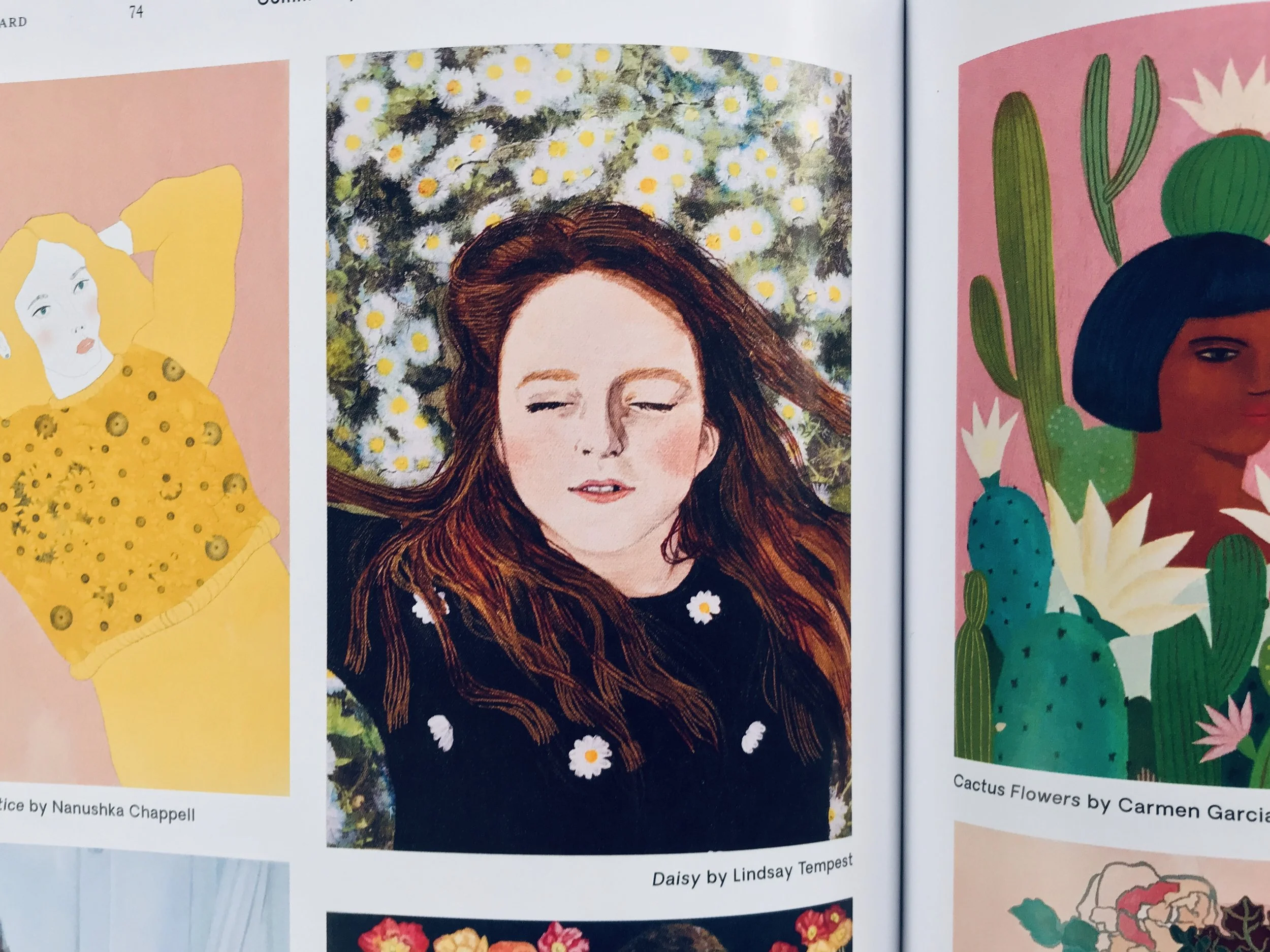
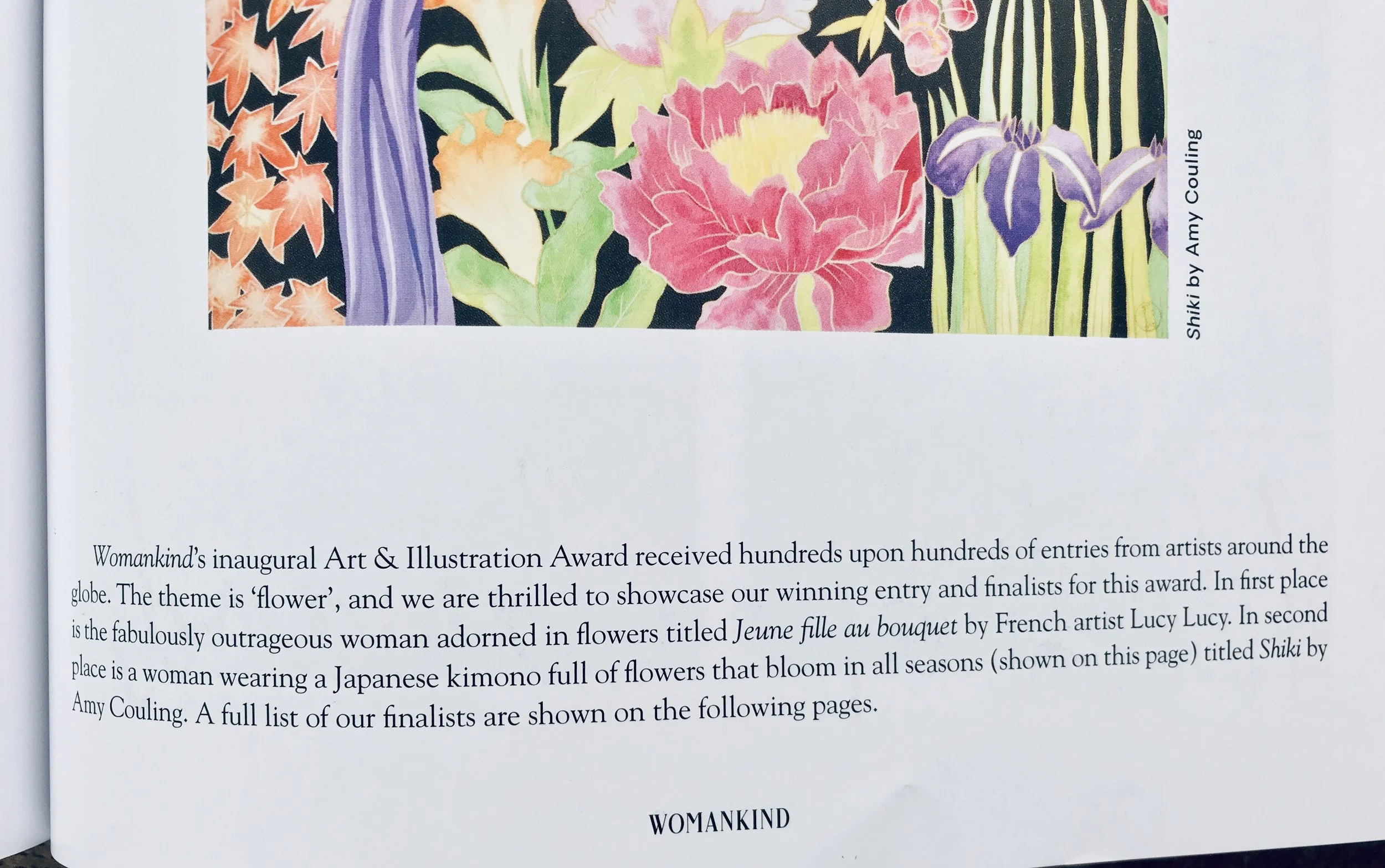
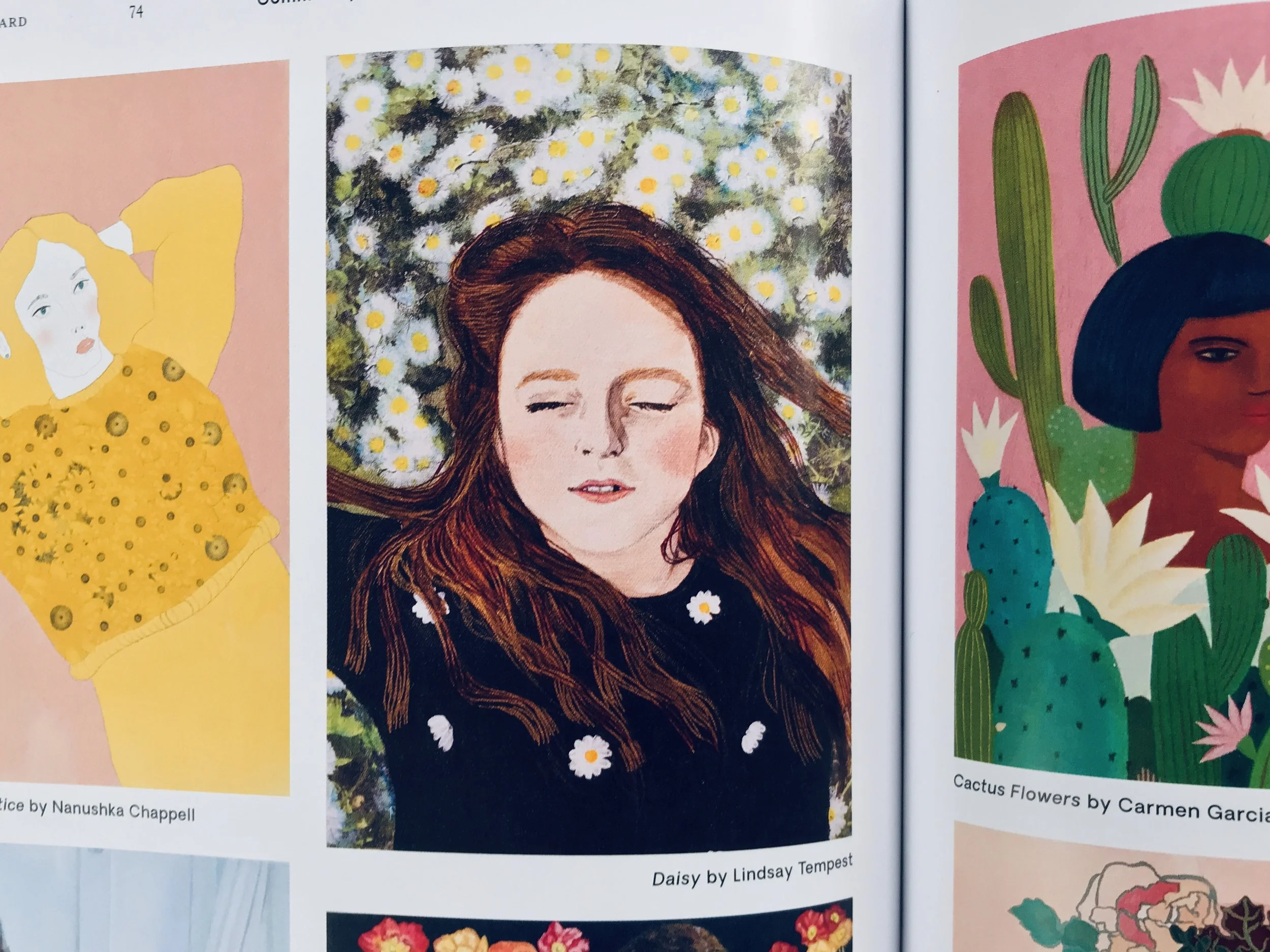
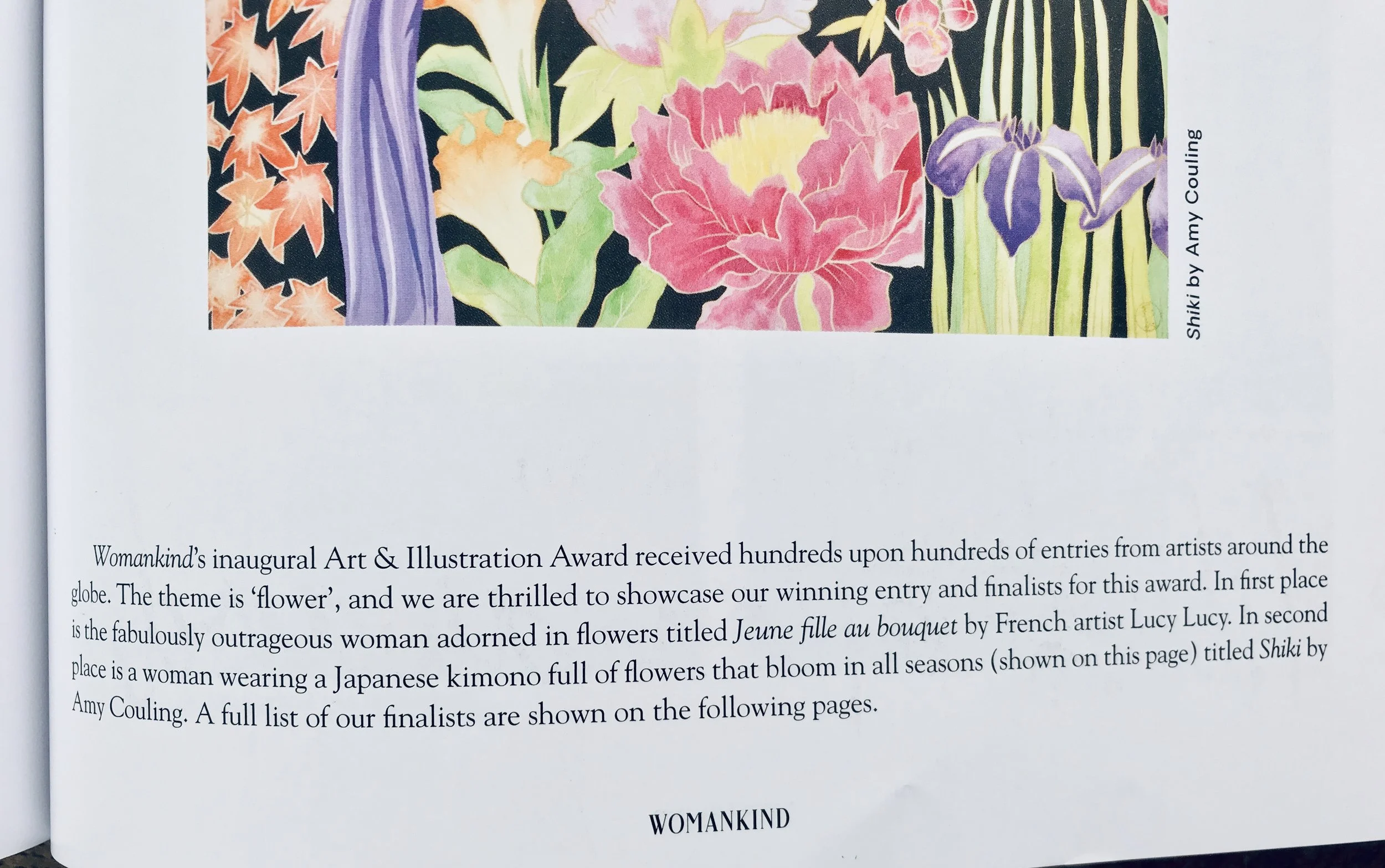
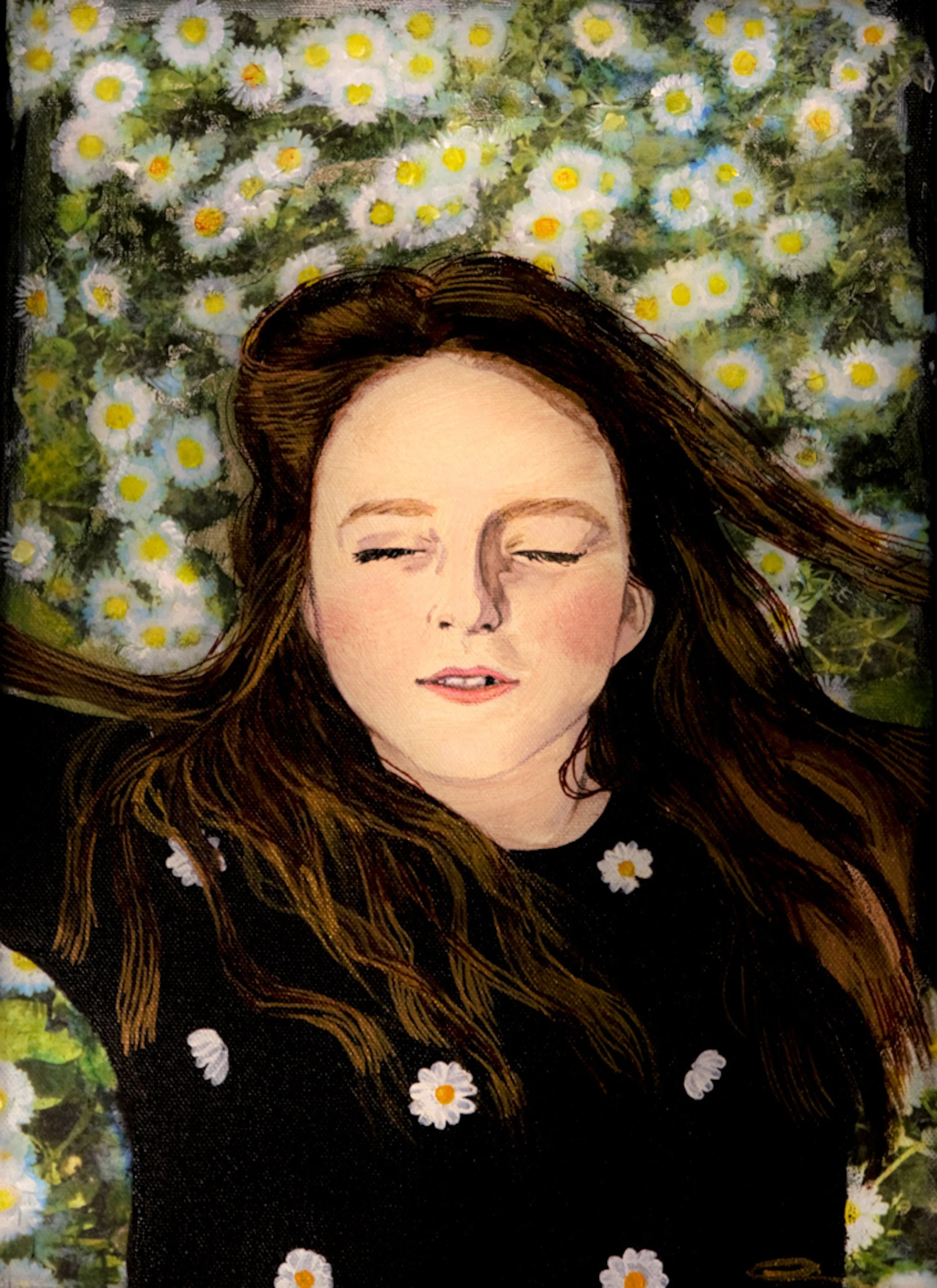
Womankind’s inaugural Art & Illustration Award was held in 2019 and received hundreds of entries from artists from around the globe.
The theme was ‘flower’, to which I submitted my entry ‘Daisy’, which made the final 5. This experience formally introduced me to illustration, helping me gain confidence in this forte.
I subsequently illustrated for a few magazines, but realised this type of work (freelance) wasn’t for me. So what could you learn from my experience? Well, of course, everyone’s different. But my main takeaways of professional illustration work as a neurodivergent person;
-Communication can be a problem. If people don’t come back to you re questions when you’re waiting to move on with work, then it’s a waste of valuable time, especially with deadlines looming
-Roughs don’t mean roughs. They mean produce something that’s ready to publish, or to the standard of work you sent in
-Money in the beginning can be terrible, more on that in a later blog